


Essential Post-Surgery Care Tips for Endoscopic Septoplasty and Turbinoplasty
- Dr Cheong Jack Pein
- Jul 23
- 4 min read
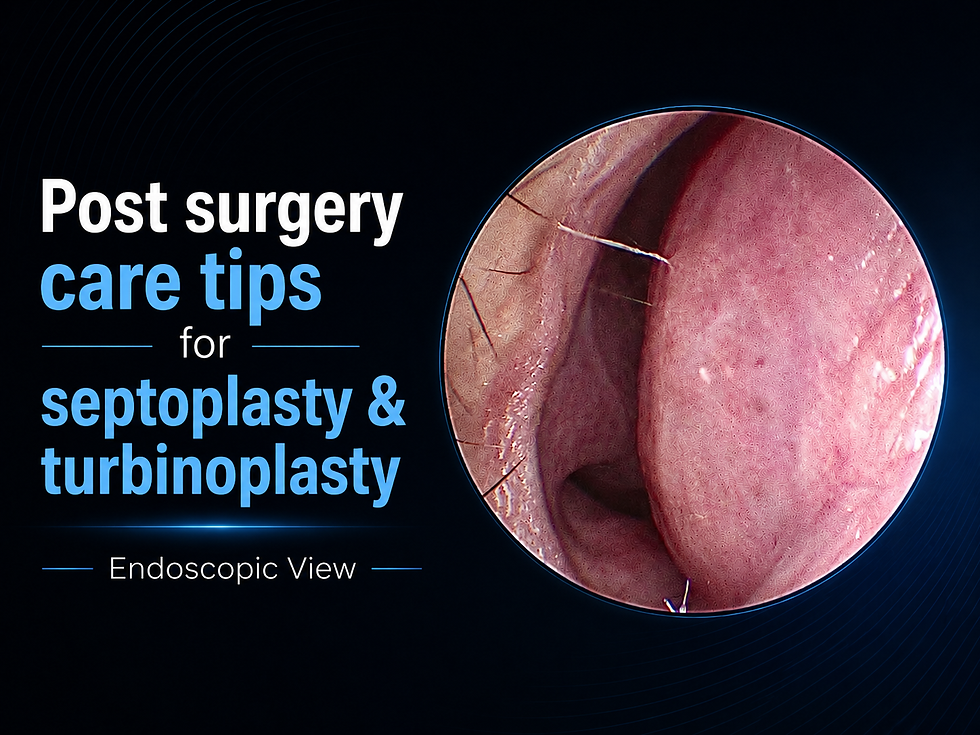
What to Expect After Surgery
It is common to experience the following after surgery:
Nasal blockage or stuffiness for 1–2 weeks
Mild blood-stained nasal discharge
Crusting inside the nose
Mild facial pressure or discomfort
Temporary reduced sense of smell
Mild throat discomfort from anaesthesia
Sneezing or watery nasal discharge
Nasal breathing usually improves gradually as swelling and crusting settle. The nose may feel more blocked during the first few days because of swelling, mucus, and crusting. This is expected and does not mean the surgery has failed.
Nasal Packing / Splints
Some patients may have nasal packing, silicone splints, or absorbable dressing placed inside the nose.
Please do not attempt to remove anything from the nose yourself.
Packing or splints, if present, will be removed during follow-up as advised by your doctor.
Bleeding
A small amount of blood-stained discharge is expected, especially during the first few days.
To reduce bleeding:
Rest with your head elevated
Avoid bending down, heavy lifting, or straining
Do not blow your nose forcefully
Sneeze with your mouth open
Avoid hot drinks, hot showers, sauna, and spicy food for the first few days
Avoid alcohol & cigarette smoking
If there is fresh bleeding from the nose after surgery:
Do not lie down. Sit upright and lean slightly forward.
It is not advisable to pinch the nose, as the nose may be painful after surgery and blood may flow backwards into the throat.
Place layers of clean gauze in front of the nostrils and secure them gently with plaster/tape to absorb the blood.
Change the gauze when it becomes soaked.
Apply a cold compress using ice cubes wrapped in a thin cloth or plastic bag over the forehead and cheeks for 15–30 minutes.
Rest quietly and avoid talking, walking around, bending down, or straining.
Do not blow your nose.
Seek urgent medical attention if the bleeding is heavy, persistent, or associated with dizziness, fainting, vomiting blood, or difficulty breathing.
Nose Care After Surgery
Proper nose care is important to keep the nose moist, soften crusts, reduce blockage, and help healing.
Day 1 After Surgery
On the first day after surgery:
Raise the head of the bed about 30 degrees. Do not lie flat.
Place layers of clean gauze in front of the nostrils and secure gently with plaster/tape. This acts as a small gauze bolster to trap any blood-stained discharge.
Change the gauze when it becomes wet or soaked.
Apply a cold compress using ice cubes wrapped in a thin cloth, plastic bag, or glove over the forehead and cheeks for 15–30 minutes.
Repeat the cold compress every 6 hours on Day 1. This may help reduce or prevent bleeding.
Rest quietly and avoid bending down, straining, heavy lifting, or walking around too much.
Do not blow your nose.
Sinus Rinse / Saline Rinse
Sinus rinse may be started on Day 2–3 after surgery, or when the nose starts to feel blocked.
However, sinus rinse should only be done when there is no more active bleeding.
Please avoid sinus rinse if there is fresh bleeding from the nose.
When using sinus rinse:
Use only clean, warm water, sterile water, or distilled water
Follow the mixing instructions provided with the rinse bottle or sachet
Rinse gently; do not forcefully squeeze the bottle
Stop rinsing temporarily if fresh bleeding occurs
Nasogel
Nasogel may be used in between rinsing, usually every 6 hours.
It is mainly used to:
Keep the nose moist
Reduce dryness
Soften crusts
Make the nose feel more comfortable
Nasal Steroid Spray
Nasal steroid spray such as Nasonex or Avamys may be used once daily, if advised by your doctor.
It is best used after sinus rinsing, so the spray can work better on the nasal lining.
When using nasal steroid spray:
Shake the bottle before use
Aim the spray slightly outwards, away from the middle septum
Do not sniff too hard after spraying
General Nose Care
Do not pick the nose or remove crusts by force
Avoid inserting cotton buds or tissue deep into the nose
Keep the nose clean gently from the outside only
Avoid dusty, smoky, or polluted environments
Attend follow-up visits for cleaning and assessment
Crusting is normal after surgery and will be cleaned during follow-up visits if needed.
Medications
Please take your medications as prescribed. These may include:
Painkillers
Antibiotics, if prescribed
Nasal saline rinse
Nasogel
Nasal steroid spray such as Nasonex or Avamys
Avoid aspirin or blood-thinning medications unless your doctor has specifically allowed them.
If you are already taking blood-thinning medication for another medical condition, please follow your doctor’s specific instructions on when to restart it.
Diet and Hydration
You may resume a normal diet once you are fully awake and not nauseated.
For the first few days:
Drink plenty of fluids
Take soft, light meals if your throat feels sore
Avoid very hot food or drinks
Avoid alcohol & smoking
Avoid spicy food if it triggers sneezing, runny nose, or bleeding
Activity and Rest
For the first week:
Rest at home
Avoid strenuous exercise
Avoid heavy lifting
Avoid bending down for long periods
Avoid swimming
Avoid dusty or smoky environments
Most patients can return to light work or school after 2 weeks, depending on recovery and your doctor’s advice.
Please avoid contact sports or activities with risk of nose injury until your doctor allows it.
Nose Blowing and Sneezing
Do not blow your nose forcefully during the early recovery period. If you need to clear discharge, dab gently with tissue from the outside. If you need to sneeze, sneeze with your mouth open to reduce pressure inside the nose.
Follow-Up Appointment
Follow-up is important to check healing, remove crusts or splints if needed, and monitor your recovery. Please attend your follow-up appointment as arranged. During follow-up, your doctor may clean the nose gently to remove crusts and improve breathing.
When to Seek Medical Attention
Please contact your doctor or go to the Emergency Department if you experience:
Heavy or persistent nose bleeding
Fever more than 38°C
Increasing facial pain or swelling
Foul-smelling nasal discharge
Severe headache or neck stiffness
Eye swelling, double vision, or reduced vision
Persistent vomiting
Difficulty breathing
Severe drowsiness or confusion
Recovery Timeline
First Few Days
Blocked nose, mild bleeding, swelling, and discomfort are common. The nose may feel more blocked than before surgery.
1–2 Weeks
Crusting and blockage gradually improve. Follow-up cleaning may make breathing more comfortable.
3–6 Weeks
Nasal breathing becomes more comfortable as swelling reduces.
Up to 3 Months
Final healing and nasal airflow continue to improve.


Comments